
Last updated November 17, 2026
 Home additions & ADU
 Kitchen remodeling
 Bathroom remodeling
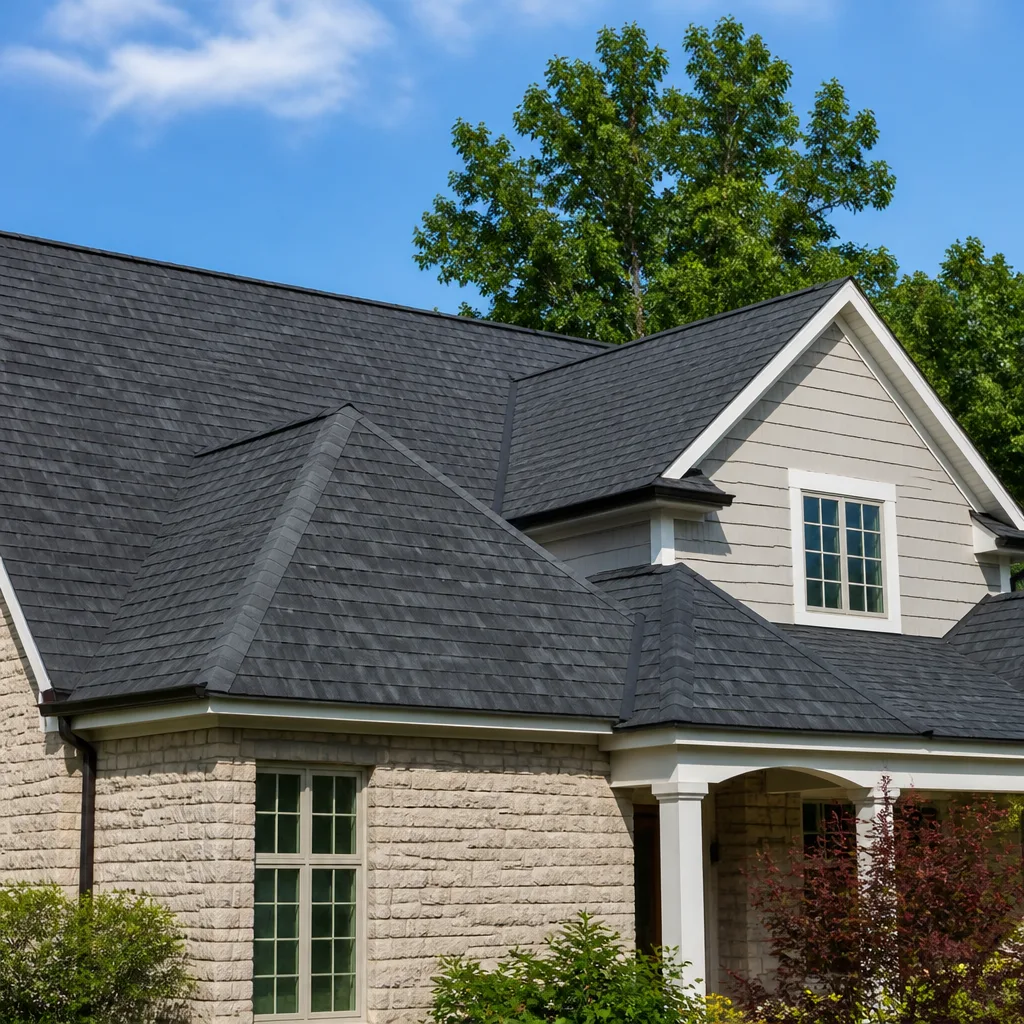 Roofing
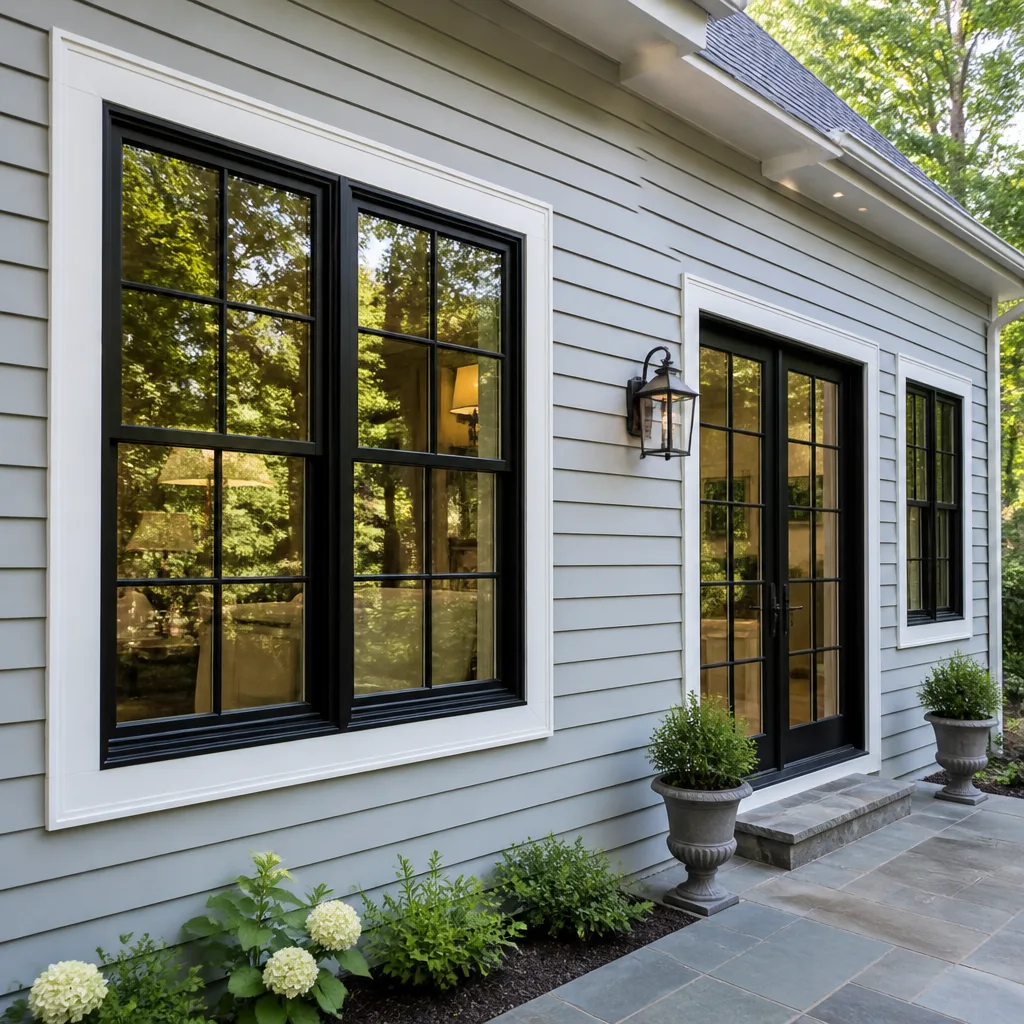 Windows & doors
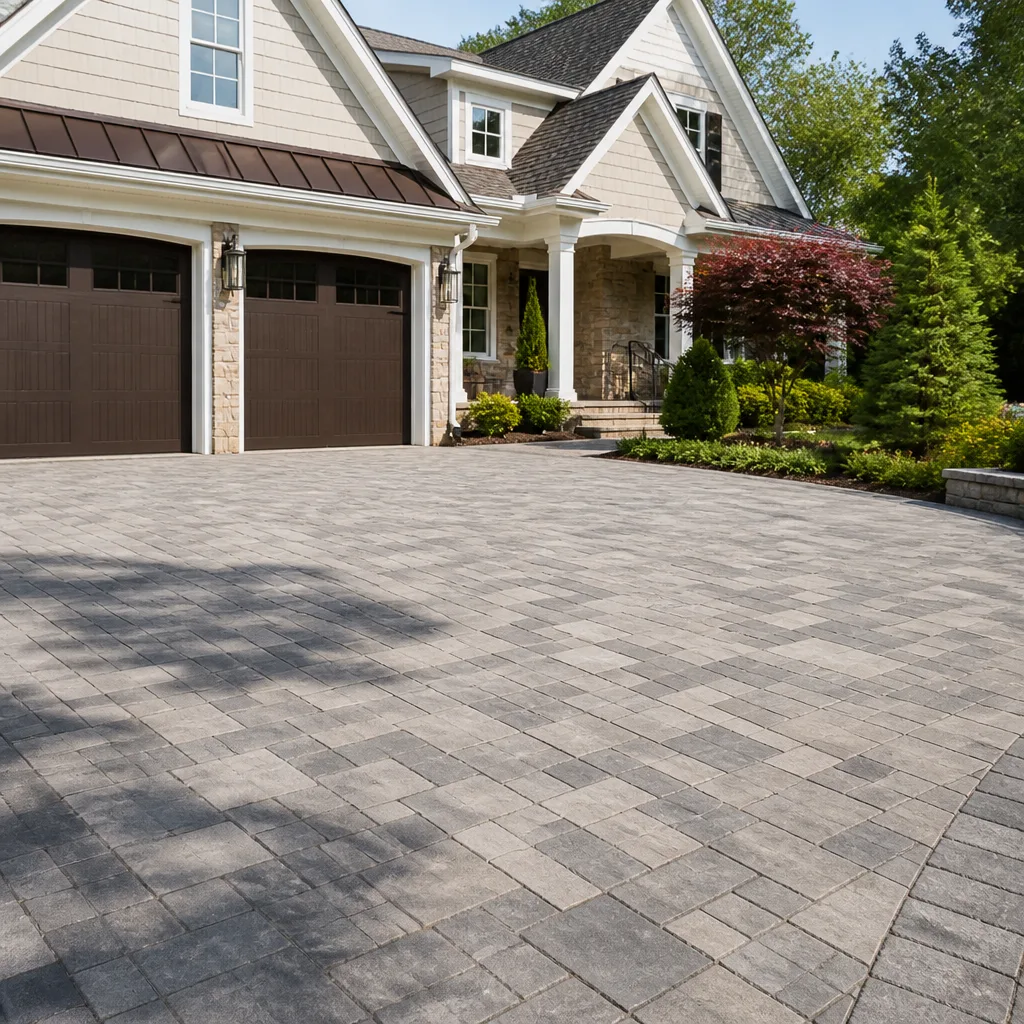 Driveway & pavers
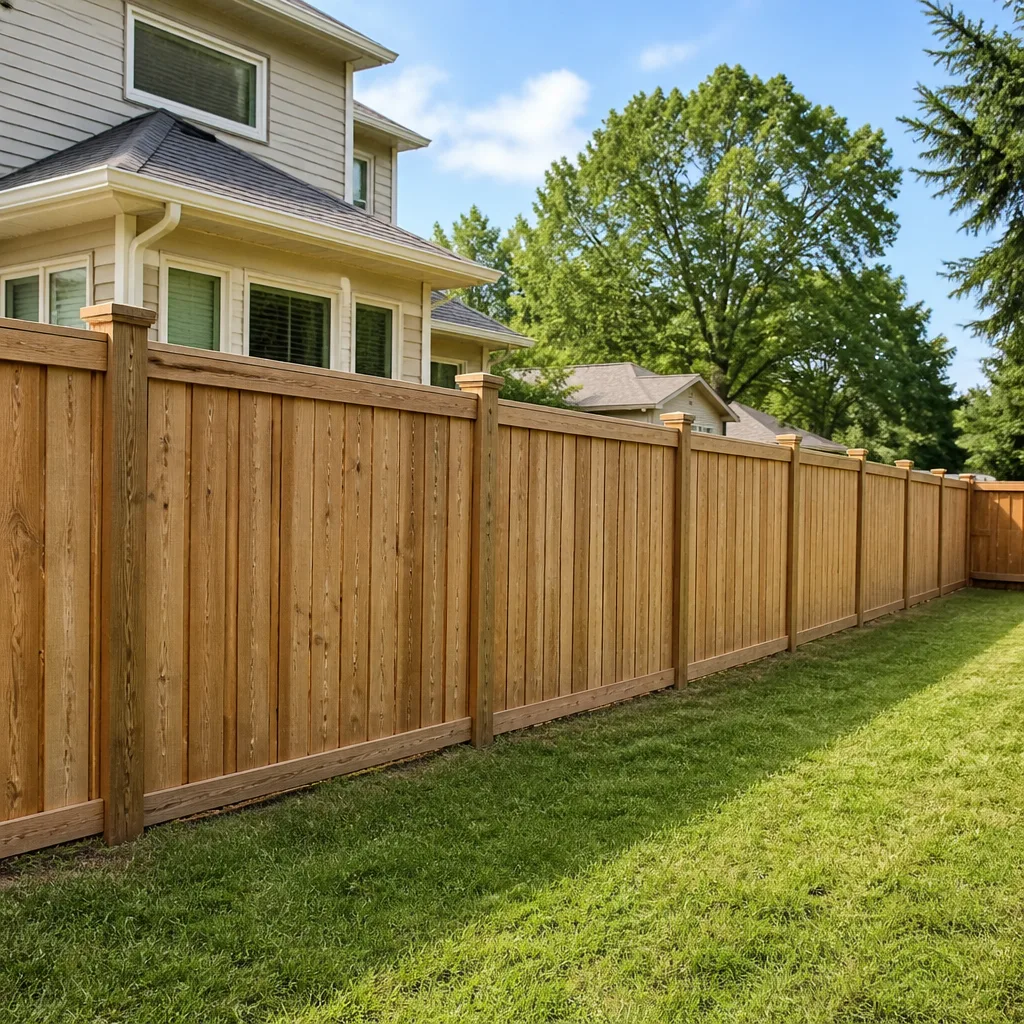 Fence
Free written scope consultation - allowances, timeline, and change-order rules on paper before a single trade is scheduled
DIY vs Professional Construction: The Antioch Homeowner’s Decision Guide
Most homeowners in Antioch who get into trouble with a renovation did not get into trouble because they lacked skill. They got into trouble because they took on work that California requires a permit for, skipped the inspection, and only learned about it years later when a buyer’s appraiser or a title company asked for the paper trail. The physical task was within their ability. The legal exposure wasn’t. This guide is about where that line sits in Antioch, how to calculate what a DIY project really costs you once permits, inspections and resale disclosure enter the picture, and how to structure a hybrid job so you keep the parts worth keeping and hand off the parts that carry liability.
Quick Answer
In Antioch, DIY makes sense for projects with no permit requirement, no licensed trade work, and a reversible outcome if you get it wrong. It stops making sense the moment the work touches your electrical panel, structure, egress, gas, or anything that will be disclosed on a resale transfer. Hire a licensed professional for permit-required and trade-licensed scope, and handle finish work yourself only with your contractor’s written agreement so you don’t void the work they stand behind.
Styles & brands we work with
- Kitchen remodeling
- Bathroom remodeling
- Home additions & ADU
- Roofing
- Windows & doors
- Driveway & pavers
- Fence
Table of Contents
- Why permit exposure, not skill, is the real dividing line in Antioch
- The Antioch projects you should never DIY in California
- How to calculate the true DIY cost of a project in Antioch
- Projects where experienced DIY genuinely makes sense in Antioch
- What owner-builder status legally means in California
- The hybrid model: splitting scope with a licensed contractor
- How to choose a contractor in Antioch for the work you won’t do yourself
Why Permit Exposure, Not Skill, Is the Real Dividing Line in Antioch
The DIY-versus-hire question usually gets framed as a skill question. Can you lay tile? Can you frame a wall? That framing misses what actually goes wrong. The projects that create expensive problems later are the ones where the homeowner was physically capable but legally out of their depth, and California regulates more of the residential work around a house than most states do.
Antioch sits in Contra Costa County, and the permitting authority for most residential work inside city limits is the City of Antioch’s building department. That department enforces the California Building Standards Code, which is a statewide baseline with local amendments. What that means in practice is that panel upgrades, structural modifications, new or enlarged openings in bearing walls, window replacements that change egress dimensions, and any new habitable square footage all require permits. Work that a homeowner in a less regulated state might do on a weekend without a second thought triggers an inspection sequence here.
Here’s the part most guides skip. The city is not the only party with an interest in whether the work was permitted. When you sell a house in California, you complete a transfer disclosure statement that asks about alterations and permits, and buyers, their agents, and their lenders all read it. An unpermitted addition or an unpermitted panel change shows up in a title or permit history search, and the negotiation that follows is rarely cheap. This is the financial risk that makes “I can probably do this myself” a more expensive sentence in Antioch than it sounds.
The practical takeaway: before you decide DIY or hire, find out whether the project needs a permit. That single question sorts more projects correctly than any skill self-assessment. If the answer is yes, the rest of the decision is mostly about who is going to be responsible for the inspection.
The Antioch Projects You Should Never DIY in California
Some work is dangerous enough that no amount of confidence makes it a good idea. Electrical panel work is the clearest example. The main service panel and anything upstream of it carries live current at levels that can kill, and the work requires a permit and inspection regardless of who does it. We recommend a licensed electrician every time, without exception. The same holds for gas line work, which requires pressure testing and inspection, and for any structural modification: removing a wall, enlarging a doorway, adding a beam, sistering a joist.
Any work affecting egress deserves its own category, because homeowners routinely underestimate it. Egress covers the size and operation of bedroom windows, the clear width of stairs and hallways, and the swing and dimensions of exit doors. Replacing a bedroom window with a slightly smaller one can make a room non-compliant even though the installation looks perfect. Enclosing a carport into living space can eliminate a required exit path. These are code questions, not craft questions, and getting them wrong means redoing the work and potentially reversing it at resale.
The full list of work to hand off in Antioch:
- Electrical service and panel work, including subpanel additions and any new circuit that feeds a wet area or a major appliance.
- Gas lines, including new appliance connections and any relocation.
- Structural work: bearing wall removal, beam replacement, foundation repair, second-story additions.
- Anything affecting egress: bedroom windows, stair geometry, exit doors, and conversions of non-habitable space into habitable rooms.
- Roof replacement and any re-roofing that involves sheathing repair, because the deck condition is unknown until the old material is off and the permit inspection covers it.
- New habitable square footage, whether a traditional addition or a detached unit, both of which trigger plan review, setbacks, and utility calculations.
When a project lands on this list, the question shifts from “can I do this” to “who is going to own the permit and the inspection.” That’s a different and more useful question, and it’s the one we’ll come back to in the hybrid section below. If you’re weighing a larger structural project, our page on home additions & ADU walks through how plan review and build-out actually sequence in Antioch.
How to Calculate the True DIY Cost of a Project in Antioch
The DIY cost calculation most homeowners run is materials at retail plus their own time at zero. That math is wrong in a way that flatters DIY, because it leaves out the four costs that decide the outcome. Run the full calculation before you commit, and be honest about each line.
- Materials at non-trade pricing. A contractor buys at trade pricing on the brands they install – the difference between a homeowner buying Kohler or Moen fixtures at retail and a contractor sourcing the same line through a trade account is real money on a full bathroom. Add the cost of buying twice when you order the wrong size or the wrong rough-in and can’t return it.
- Permit fees as an owner-builder. When you pull your own permit, you pay the full permit fee plus plan review where required, and you carry the scheduling burden. Ask the City of Antioch building department for the current fee schedule for your specific scope before you assume it’s a rounding error.
- Inspection scheduling time. Every inspection is a calendar event that gates the next stage of work. A DIY project stretches because you’re waiting for an inspection window while your living room is torn apart. That’s not a dollar cost on an invoice, but it’s a real cost in disrupted household time, and it’s the line item homeowners most often forget.
- Re-do risk on first-time scope items. If you have never waterproofed a shower pan or flashed a roof penetration, budget for the possibility that the first attempt fails inspection or fails in service. The cost of the redo is materials twice plus the original labor, and on waterproofing the failure often doesn’t show up until water damage is already in the framing.
Add those four lines together and compare against a written contractor estimate that includes materials, labor, permits, and inspections as separate line items. That comparison is the only honest one. A contractor who gives you a fixed written estimate with no change orders is giving you a number you can actually hold against your DIY math. A verbal ballpark isn’t.
Projects Where Experienced DIY Genuinely Makes Sense in Antioch
DIY is not the enemy here. Plenty of work around an Antioch house is well suited to a capable homeowner, and the criteria for sorting it are simpler than most guides admit. The project should require no permit, involve no licensed trade, and be reversible if you get it wrong. If all three are true, the downside of a mistake is cosmetic and fixable, and the savings are real.
Consider our climate when you sort projects. Antioch summers run hot and dry, and winters are mild and wet rather than cold. That profile favors exterior work done in spring and fall and makes interior projects a good fit for the hot months. It also means the failure modes that matter here are sun and moisture, not frost. A fence post set too shallow will lean after a few wet winters. A deck finish applied in direct summer sun will fail early. Those are the local realities to plan around, not freeze damage.
Work that typically fits the DIY criteria in Antioch:
- Interior painting, which needs no permit, no trade license, and is fully reversible with primer and a roller.
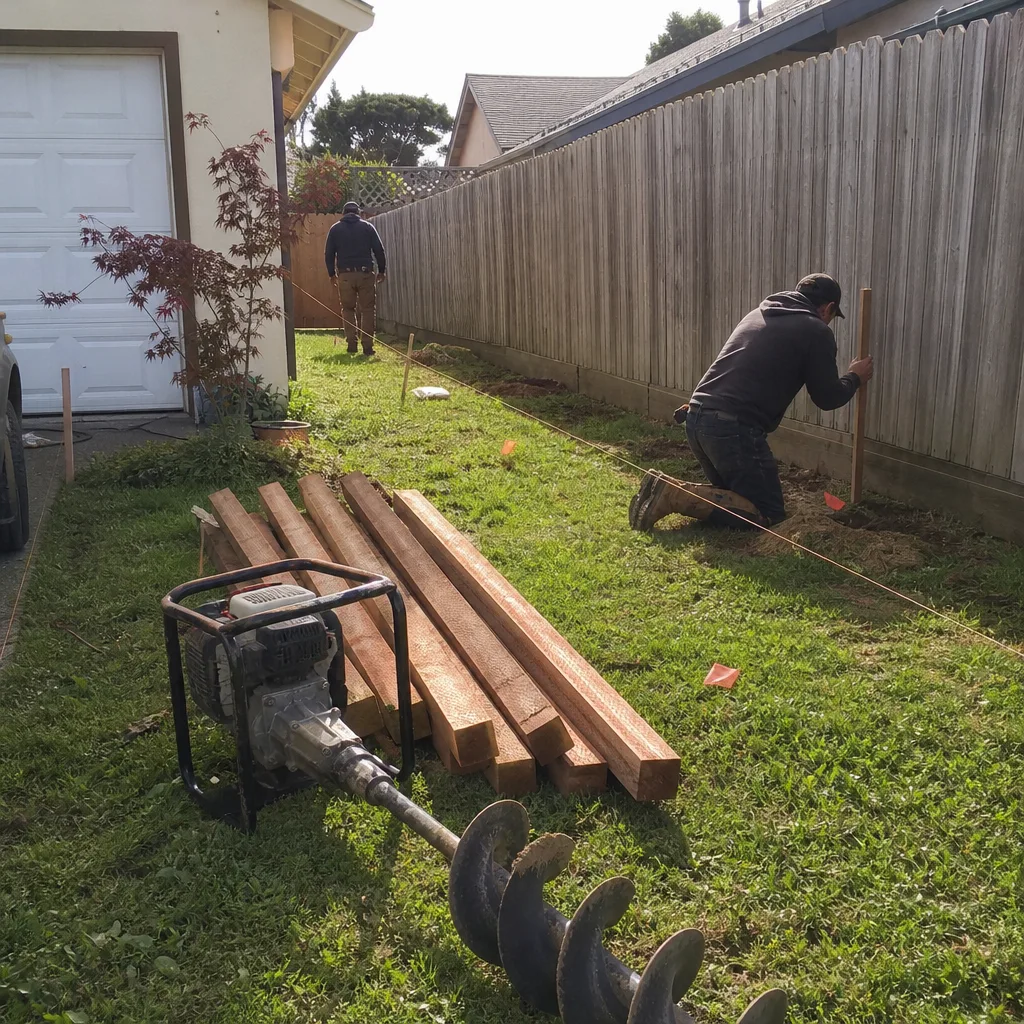
- Fence repair and like-for-like replacement of a small run, where you’re matching the existing height and alignment and not changing the property line. A full perimeter fence with new posts is a bigger job, and our page on fence installation covers where that line sits.
- Landscaping and planting, including drip irrigation on an existing hose bib, as long as you’re not tying into the potable supply or adding a new backflow device.
- Cabinet hardware, shelving, and interior trim, which are cosmetic, reversible, and don’t touch systems.
- Paver repair or re-sanding on an existing patio, where the base is sound and you’re refreshing the surface rather than rebuilding the structure. A full driveway replacement is a different conversation, and our page on driveway & pavers explains why base preparation is where most failures start.
The test is simple. If the worst outcome is a weekend wasted and a trip to the hardware store, do it yourself. If the worst outcome involves a permit violation, a failed inspection, or water where water shouldn’t be, hand it off.
What Owner-Builder Status Legally Means in California
When you pull a permit on your own home for work you’ll do yourself, you’re acting as an owner-builder. California treats that status with more seriousness than most homeowners expect. An owner-builder takes on the responsibilities of the contractor of record: the permit is in your name, the inspections are your obligation to schedule, and the code compliance is yours to achieve. If the work fails inspection, the correction is yours to make.
The part that catches people is the disclosure tail. Work performed under an owner-builder permit on a California residential property creates a disclosure obligation when the property is later sold, and the window on that obligation runs long – a decade is the number most commonly cited in transaction documents. In plain terms, the work you permitted as an owner-builder follows the house for years, and the buyer’s side will ask about it. If the work was done without a permit at all, the problem is worse: you may be asked to permit it retroactively, open walls for inspection, or credit the buyer. None of those outcomes were priced into the original DIY savings.
There’s a second layer here that matters in Antioch specifically. Because the statewide code is the baseline, a homeowner arriving from a state where this or that task was unregulated often assumes the same rules apply. They don’t. Electrical, plumbing, mechanical, and structural work all carry permit and inspection requirements here, and the owner-builder exemption from contractor licensing does not exempt you from building code. Acting as your own contractor is legal. Acting as your own contractor without permits is not.
Our advice is to decide owner-builder status on purpose rather than by default. Pull the permit, do the work, get the inspection, and keep the paper. If you’d rather not carry that record yourself, hand the permit to a licensed contractor and let the inspection land on their record instead.
The Hybrid Model: Splitting Scope With a Licensed Contractor
The hybrid model is the most underused option and usually the best one. It means a licensed contractor takes the permit-required and trade-licensed scope – the structural, electrical, plumbing, roofing, and anything that triggers inspection – while you take the finish work that doesn’t. You get the savings on the parts where savings are real, and you avoid the liability on the parts where liability is expensive. The split only works if it’s structured in writing up front.
Here’s how to structure it so nobody’s warranty gets voided:
- Define the split in writing before work starts. List each task and who owns it. Ambiguity here is where warranty disputes come from.
- Agree on the inspection boundary. Anything that has to pass an inspection belongs to the licensed contractor’s scope, because they’re the one signing for it.
- Confirm what finish work affects the warranty. Some contractors will warrant their tile work only if they installed it. Ask specifically which finish items you can take over without affecting the work they stand behind, and get the answer in writing.
- Sequence the handoff. Your finish work comes after their rough-in passes inspection. Doing it in the wrong order means tearing out your own work to let an inspector see behind it.
- Keep a single point of responsibility for the permit. One name on the permit, one party responsible for the inspection schedule. Mixed responsibility on the permit is how projects stall.
We work with homeowners on hybrid jobs regularly, and the ones that go smoothly have one thing in common: the split was decided before the first material was ordered, not adjusted mid-job. That’s not a sales position. It’s a project management one.
How to Choose a Contractor in Antioch for the Work You Won’t Do Yourself
For the scope you’re handing off, the contractor choice matters more than the price. The things worth checking are the same whether you’re hiring for a roof, a kitchen, or an addition, and they’re all verifiable before you sign anything.
Lead with the estimate. Ask for a written, line-item quote that separates materials, labor, permits, and inspections, and ask whether the quote is fixed or subject to change orders. A fixed written estimate is the tool that protects you, because it’s the number you can hold against your DIY calculation and against any other quote you collect. Free estimates should be standard, not a favor, and you should get more than one.
Then check the material names. Ask which manufacturers will be installed and why. A contractor who can name their lines – Silestone or Caesarstone for the countertop, Kohler or Moen for the fixtures – is giving you something you can research on your own. That transparency is worth more than a slick presentation, because you can verify quality independently instead of taking a vague claim on faith. Once the brands are named, you can compare options at every budget and make the choice driven by your priorities rather than by what happens to be in a supplier’s stock.
Finally, ask who pulls the permit and who carries the inspection. That answer tells you where the liability sits, which is the whole point of this guide.
Common Mistakes to Avoid
- Treating a skill self-assessment as the whole decision. Being able to do the physical work is only one of three tests. The other two are permit requirement and reversibility, and skipping them is how competent homeowners end up with unpermitted work.
- Assuming your old state’s rules apply here. California permits and inspects a wider range of residential work than most states. Check with the City of Antioch building department before you assume a task is unregulated.
- Pulling an owner-builder permit without understanding the disclosure tail. The work follows the house for years after you finish. That’s not a reason to avoid it, but it is a reason to decide on purpose.
- Comparing materials at retail to a contractor’s total bid. The honest comparison is your full DIY cost – materials, permit, inspection time, re-do risk – against a line-item written estimate. Anything else inflates the DIY savings.
- Splitting scope verbally. A hybrid job with no written division of tasks is how you end up with a warranty that covers nothing and a gap where someone forgot the shower pan.
- Doing finish work before rough-in inspection passes. You’ll be tearing out your own tile to let an inspector see the work behind it.
- Taking a verbal ballpark as an estimate. A price you can’t hold anyone to isn’t a price. Get it in writing, with permits and inspections listed separately.
See the difference
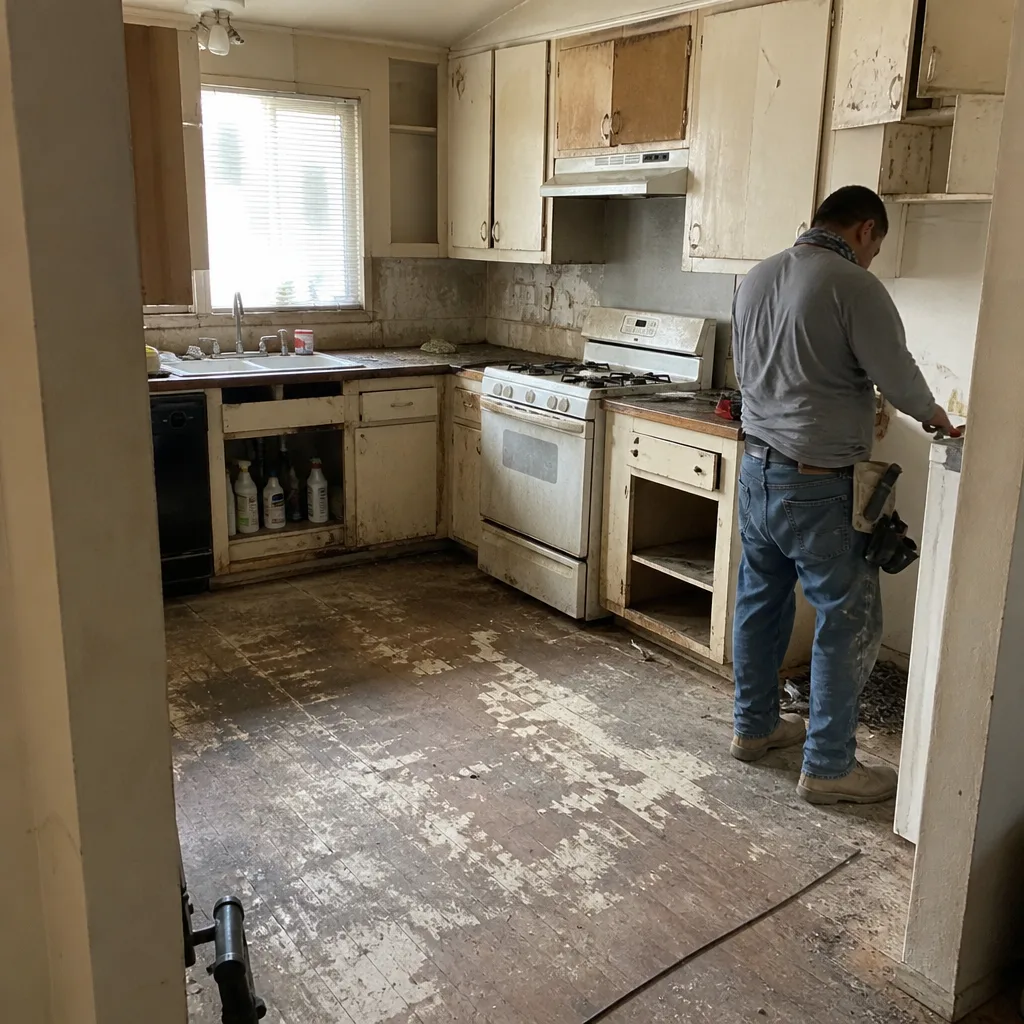 Before
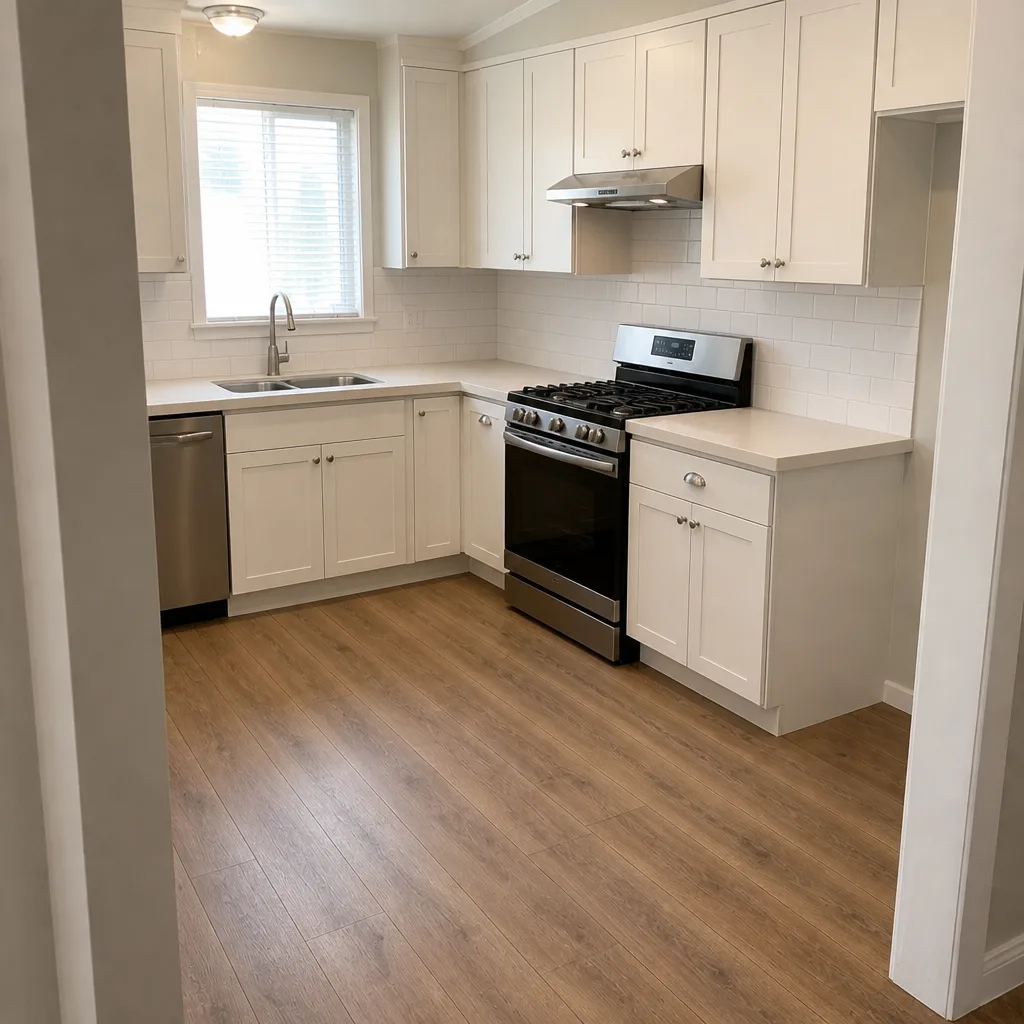 After
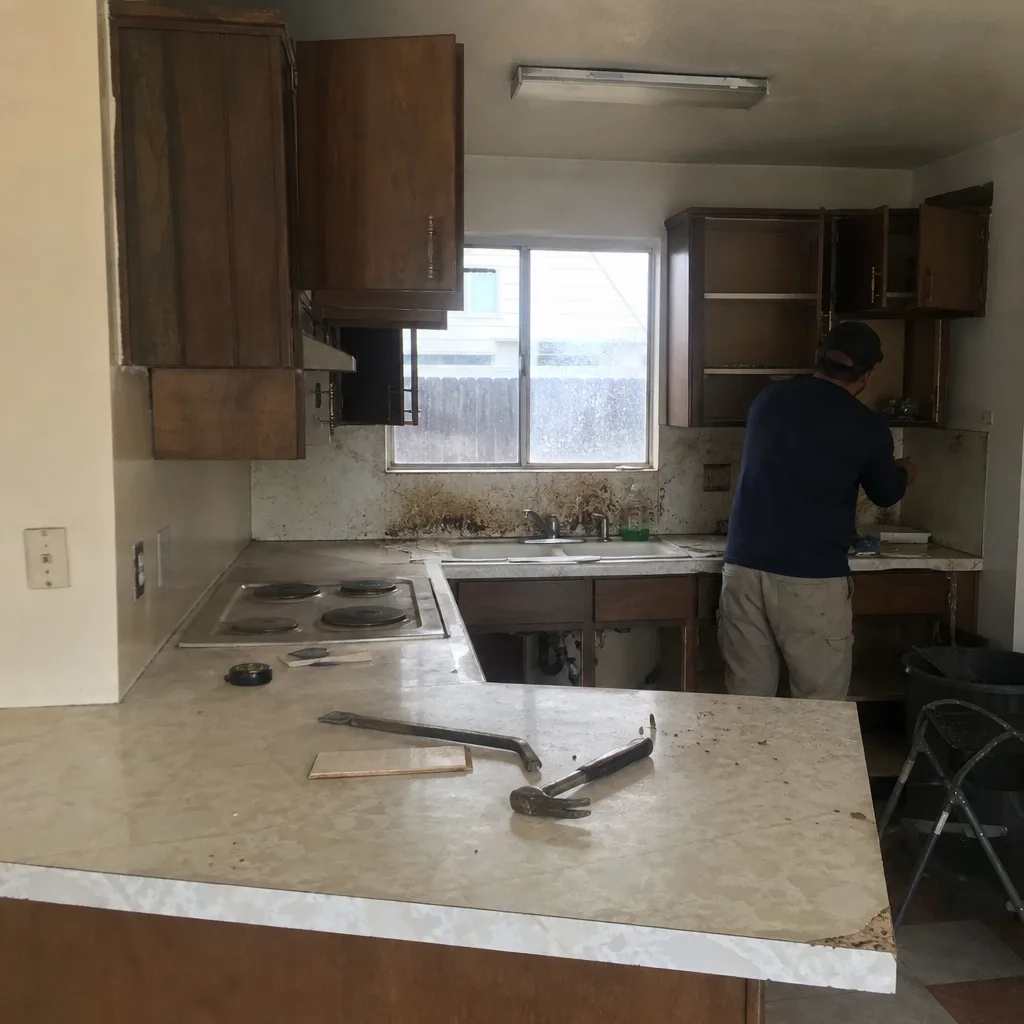 Before
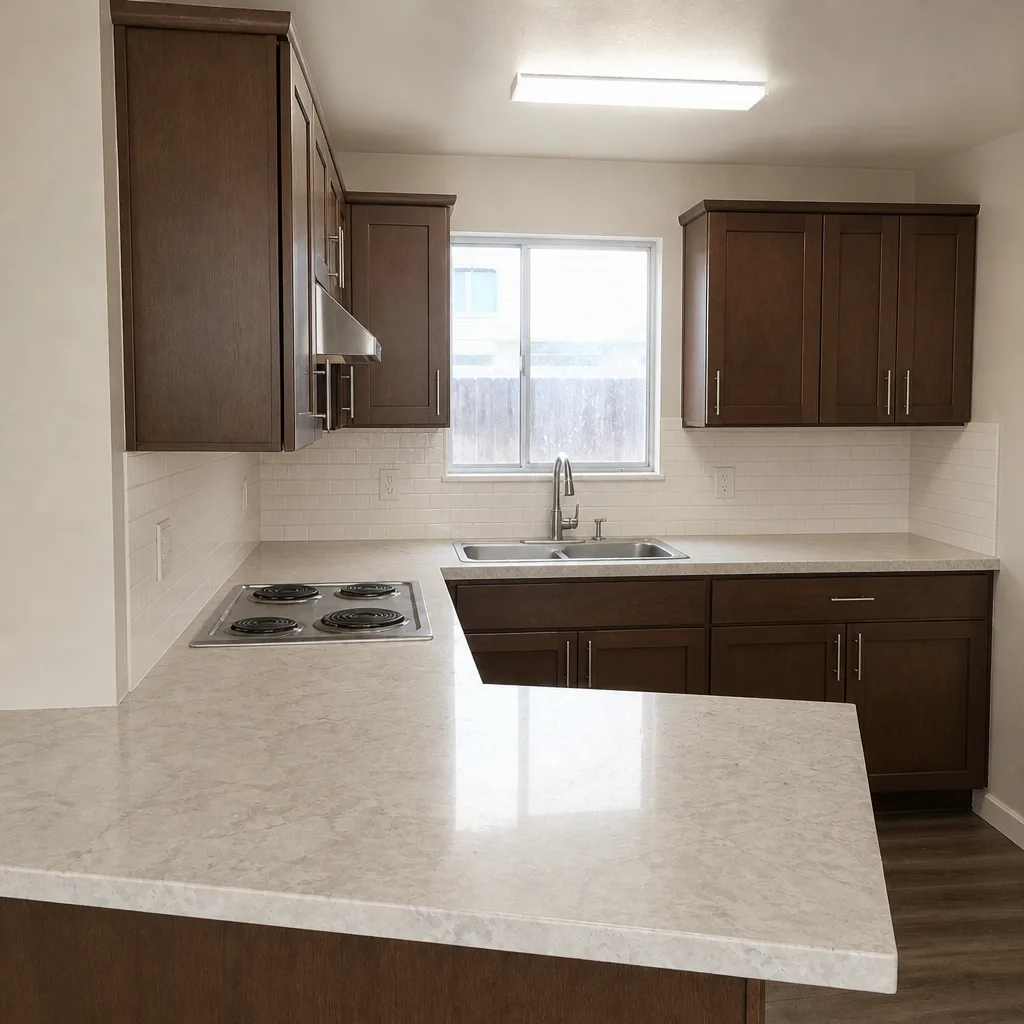 After
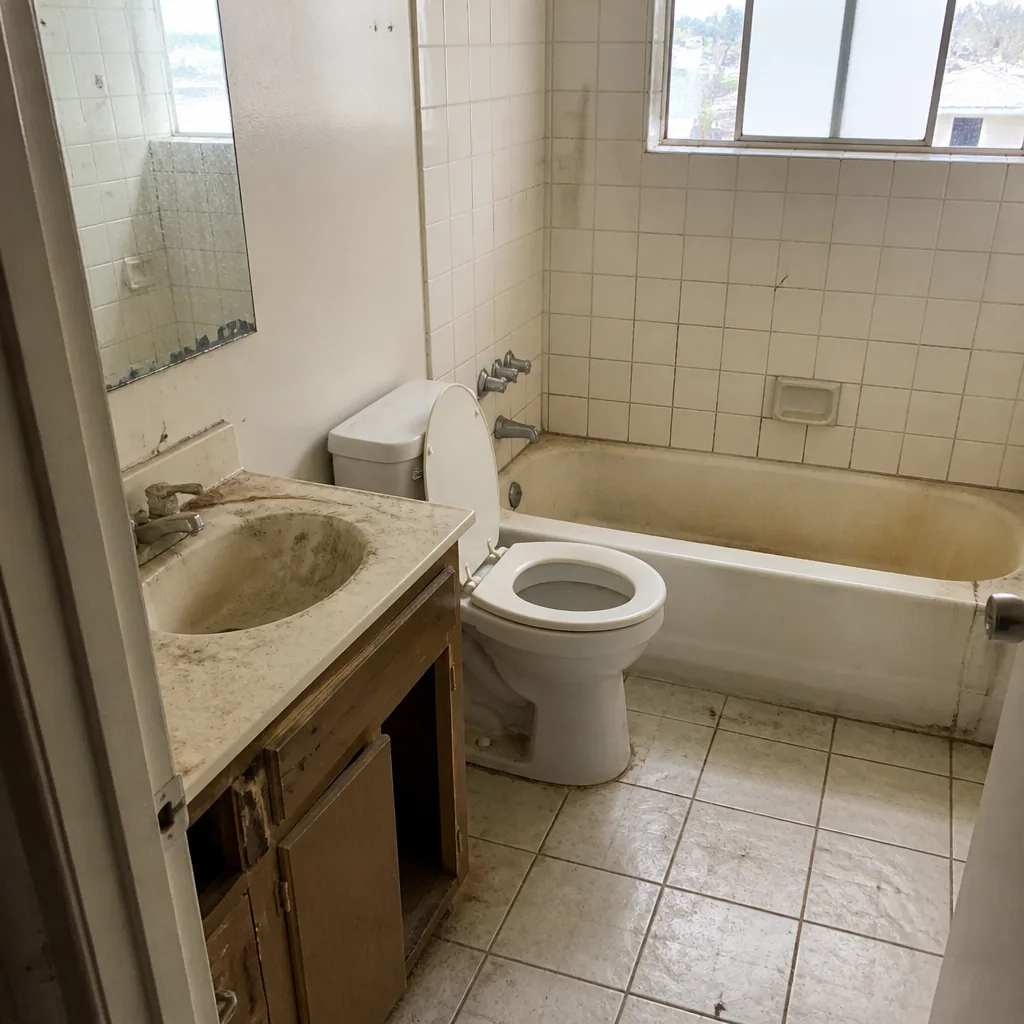 Before
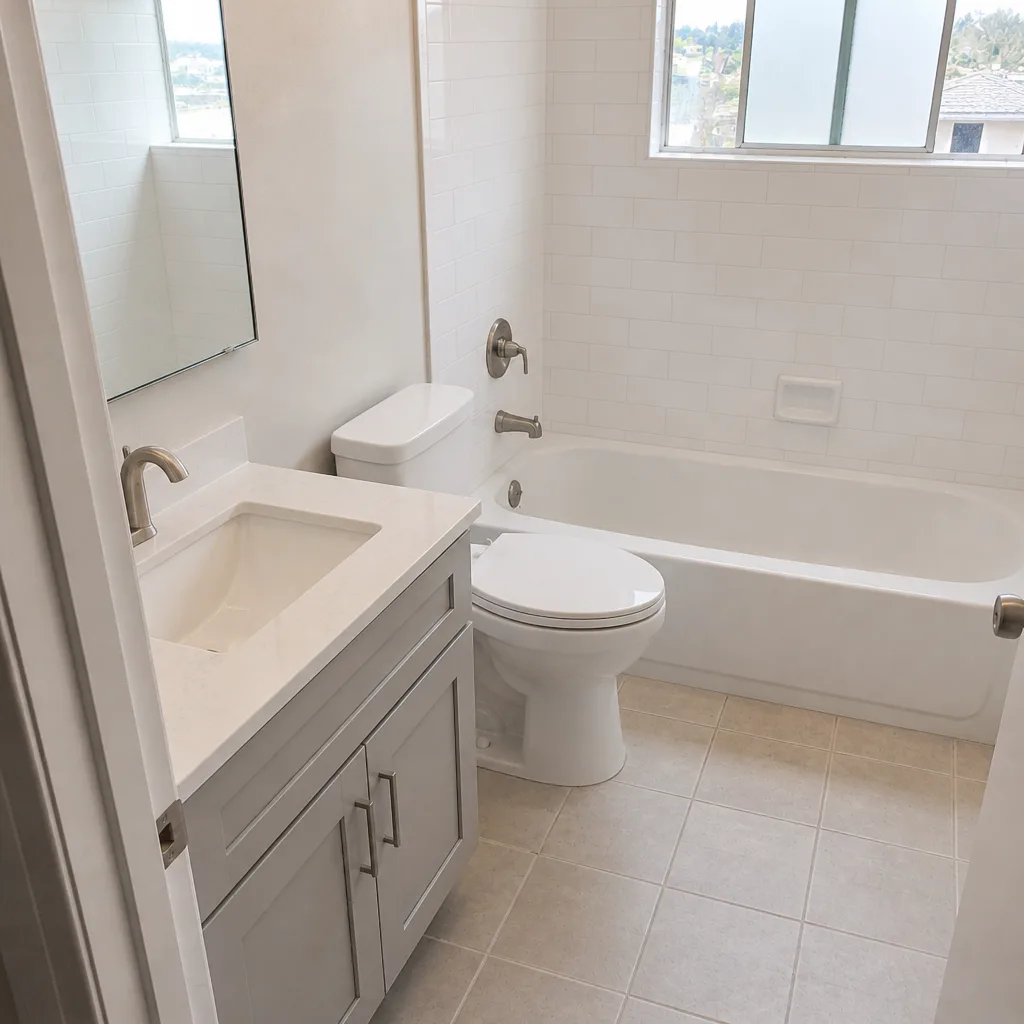 After
When to Call a Professional
Call a licensed contractor in Antioch when the work requires a permit, involves a licensed trade, or affects egress or structure – and when you want the inspection liability to sit on someone else’s record. Call when the schedule matters, because DIY stretches around inspection windows and a household can only tolerate a torn-up room for so long. And call when the scope is bigger than one project: a roof, a kitchen, and a fence don’t have to be three separate contractors with three separate schedules if you plan them together. Construction Antioch offers free estimates in Antioch – call (866) 811-9694. We answer 24/7. Fast dispatch from 7am to 7pm, Sunday through Friday. Our technicians have up to 13 years of experience, and we work with a documented roster of over 50 named material manufacturers so you can compare brands instead of taking our word for it.
Frequently Asked Questions
You can legally DIY any work that doesn’t require a permit, doesn’t involve a licensed trade, and is reversible – interior painting, trim, cabinet hardware, like-for-like repairs, and planting are the usual examples. Pulling your own permit is also legal under owner-builder status for work you’re allowed to perform, but the permit and inspection obligations are yours. When a project touches electrical, gas, structure, or egress, call (866) 811-9694 for a free estimate before you start.
Usually yes, if the remodel moves plumbing, electrical, or changes the layout – and most kitchen and bathroom remodels do at least one. Cosmetic refreshes like paint, hardware, and a like-for-like fixture swap generally don’t. The City of Antioch building department is the authority on your specific scope. If you’re planning a full remodel, call (866) 811-9694 and we’ll walk through the permit scope with you on a free estimate.
Owner-builder status means you’ve pulled the permit for work on your own residence and you carry the responsibilities of the contractor of record – scheduling inspections, meeting code, correcting failures. The work creates a disclosure obligation when the property is later sold, and the window on that obligation is long, commonly cited as ten years in transaction documents. Call (866) 811-9694 if you’d rather the permit and inspection sit on a licensed contractor’s record instead.
Sometimes, but only if you calculate the full cost – materials at non-trade pricing, permit fees as an owner-builder, the calendar time spent waiting on inspections, and the risk of redoing first-time scope items. Many DIY projects look cheaper than a bid until those four lines are added. Compare your full number against a written line-item estimate; call (866) 811-9694 for one, free.
Yes, and it’s often the best structure. The requirement is that the split is written down before work starts, with a clear line between tasks the contractor owns and tasks you own, and an agreement on which finish items you can take over without affecting their warranty. Anything that has to pass inspection belongs on the contractor’s side. Call (866) 811-9694 to structure a hybrid scope on a free estimate.
It becomes a transaction problem: buyers, their agents, and their lenders read the transfer disclosure statement and the permit history, and the negotiation that follows can require retroactive permitting, opening walls for inspection, or a credit to the buyer. The work itself may be perfectly sound and still cause a problem. If you’re unsure what’s permitted on your property, call (866) 811-9694 before you list.
The Bottom Line
The DIY decision in Antioch comes down to three tests, not one: does it need a permit, does it involve a licensed trade, and is it reversible. Projects that pass all three are good candidates for doing yourself, and the savings are real. Projects that fail any one of them carry risk that outweighs the savings, usually years later at resale. The hybrid model – contractor for permit and trade scope, you for finish work with the split in writing – is the structure that captures most of the savings with none of the disclosure exposure. Check with the City of Antioch building department on permits, get a written line-item estimate, and decide on purpose rather than by default. If you’re still not sure which side of the line a project sits on, that’s a good reason to Construction Antioch – start with a free estimate, not a purchase.
Call (866) 811-9694. We answer 24/7. Fast dispatch from 7am to 7pm, Sunday through Friday. Estimates are free, and the written quote is what sets the price.
Written by the team at Construction Antioch.